

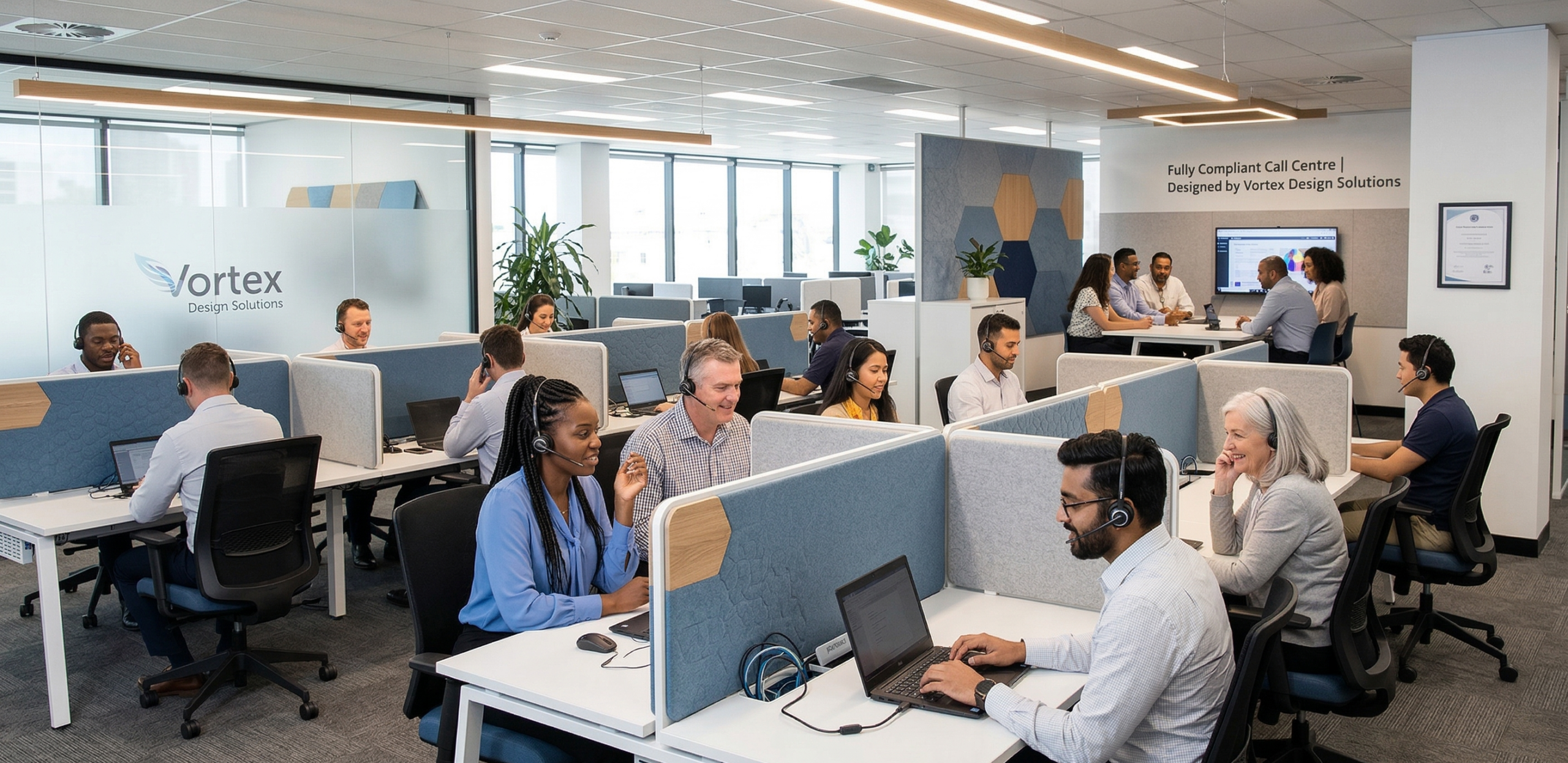
The Ultimate Guide to Using Your Tenant Installation Allowance for a High-Performance Office.
Don’t Leave Money on the Floor: How to Maximize Your TI Allowance.
Think of your Tenant Installation (TI) allowance as more than just a “decorating budget”—it is a strategic injection of capital from your landlord that, if mismanaged, evaporates into basic finishes you could have negotiated elsewhere. Most businesses make the mistake of spending their entire allowance on “vanity” upgrades while neglecting the expensive, foundational infrastructure—like high-density acoustic treatments or robust data cabling—essential for a high-performance call centre.
To truly maximize every cent, you must approach the TI as a puzzle: prioritize long-term structural improvements that increase the property’s value (which landlords love to fund) and leverage professional space planning to ensure your layout doesn’t require costly mid-construction changes.
Leaving a portion of this allowance unspent is effectively handing a cash rebate back to the building owner; instead, you should be pushing to include everything from specialized lighting to modular partitions that transform a hollow shell into a revenue-generating engine.
Beyond the Build: Navigating Landlord Standards to Avoid Costly Penalties
Navigating the transition from an empty shell to a fully operational call centre is a legal and financial minefield where minor oversights lead to major liabilities. Restoration clauses (or “make-good” provisions) are perhaps the most dangerous “silent” cost; many tenants realize too late that they are contractually obligated to spend hundreds of thousands of Rands at the end of their lease to strip out specialized acoustic panels and cabling, returning the space to a bare concrete shell. This risk is compounded when you are forced to use landlord-approved contractors who, knowing they have a monopoly on the building’s services, often charge a premium for fitout work that could be done more competitively elsewhere.
The most modern pitfall, however, lies in the shifting landscape of building compliance. In 2026, regulations like the revised Energy Performance of Buildings Directive (EPBD) and updated fire safety standards (such as EN 13501) have moved beyond simple checkboxes. Today, if your fitout doesn’t include integrated Building Automation and Control Systems (BACS) or fails to document the “Golden Thread” of fire safety materials, you may find it impossible to secure a Compliance Certificate. Without this certificate, your insurance may be voided, and the landlord could legally prevent you from opening your doors—leaving you paying rent on a office that isn’t allowed to operate.
Why Vortex Design Solutions is Your Secret Weapon
Let’s be honest: navigating the intersection of landlord red tape, 2026 building regulations, and high-performance acoustics isn’t a DIY project—it’s a specialised science. This is where Vortex Design Solutions turns the “minefield” into a competitive advantage. We don’t just “fit out” spaces; we architect revenue-generating hubs by squeezing every possible cent out of your Tenant Installation (TI) allowance.
Our team possesses the deep-tier technical expertise required to bridge the gap between your operational needs and strict landlord mandates. From integrating AI-driven energy management systems that satisfy the latest EPBD standards to managing the “Golden Thread” of fire safety documentation, we ensure your compliance is bulletproof from day one. When you partner with Vortex, you aren’t just getting a contractor; you’re getting a strategic ally who knows exactly how to negotiate with landlords, manage “approved” vendors to your benefit, and deliver a fully compliant space that is ready to scale the moment the ribbon is cut.
No Comments